Oven not heating evenly? Stove burners clicking without reason? You’re not alone. At KRUPO Appliance Repair, we understand the importance of a fully functional kitchen. This article sheds light on the most common oven and stove problems, offering practical insight before a minor fault becomes a major expense. Let’s help you recognize early signs and know when it’s time to call the professionals.
Key Takeaways
- Uneven heating and failed ignition are common but manageable.
- Broken seals or faulty wiring can impact energy performance.
- Routine inspections help avoid costly breakdowns.
- Sensor or control board faults require expert diagnosis.
- Prompt repair service ensures appliance safety and efficiency.
Identifying Common Oven and Stove Problems
When a cooking appliance stops functioning as expected, it impacts more than just the convenience of meal preparation. Understanding the early symptoms of common stove and oven problems can lead to timely solutions, improved safety, and long-term cost savings.
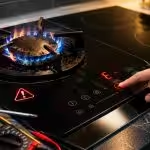
Burner Won’t Ignite
A burner that fails to ignite is a common issue in both gas and electric stoves. While it may seem like a minor inconvenience, it can point to more serious underlying malfunctions.
Possible causes include:
- Faulty spark ignition switch: A damaged or improperly aligned spark ignition switch can prevent the burner from generating the necessary spark to ignite the gas.
- Defective igniter or wiring: A worn-out igniter or loose wiring may interrupt the ignition process, requiring a part replacement or electrical inspection.
If a thorough cleaning doesn’t resolve the issue, a professional assessment is recommended to avoid risks such as gas leaks or misfires.
Oven Not Heating Properly
An oven that fails to reach or maintain its target temperature can compromise cooking results and damage internal components.
Common causes include:
- Malfunctioning bake or broil element: These heating elements may burn out or corrode over time, leading to uneven cooking or no heat at all.
- Defective temperature sensor: A defective temperature sensor can send incorrect data to the control board, resulting in overheating or underheating.
- Issues with the electronic control board: Faulty control boards may misinterpret settings or fail to activate elements properly, requiring expert diagnostics.
Accurate heat regulation is essential for both cooking performance and appliance longevity.
Electric Stove Won’t Turn On
When an electric stove shows no signs of power, the issue can stem from either electrical or component-related failures.
Typical reasons include:
- Tripped circuit breaker: A power surge or short circuit may trip the breaker connected to the appliance. Resetting it might resolve the issue.
- Failed infinite switch: If the switch that controls burner temperature fails, the burner may not turn on at all or become stuck at one heat level.
- Faulty internal wiring: Loose or damaged wires can disrupt power flow, often requiring professional repair for safety and compliance.
Initial checks should begin with the circuit breaker, followed by a detailed inspection if the issue persists.
Oven Door Won’t Close
An oven door that fails to seal properly can result in significant heat loss, inconsistent cooking performance, and increased energy consumption.
Possible causes include:
- Worn-out hinges: Hinges that are bent, loose, or rusted can prevent the door from aligning properly.
- Misaligned or broken latch: The latch mechanism may be obstructed, bent, or completely broken, stopping the door from locking into place.
Allowing the problem to go unresolved can reduce efficiency and increase utility costs.
Oven Light Not Working
While an oven light may seem like a minor component, its failure can indicate broader electrical issues.
Likely causes include:
- Burned-out bulb: Frequent use or heat exposure can shorten the bulb’s life.
- Faulty light switch: A malfunctioning switch may prevent power from reaching the bulb even if it’s functional.
Regular maintenance and early replacements help avoid wiring faults and ensure visibility inside the oven during use.
When Small Issues Signal Bigger Problems
- What starts as a basic inconvenience, such as uneven heat or a persistent clicking sound, can quickly evolve into a complex issue if ignored. Modern cooking appliances are designed with integrated systems, meaning one faulty part can affect multiple functions.
- For instance, a malfunctioning temperature sensor may trigger the oven to overheat. This, in turn, can put extra strain on the control board, leading to short circuits or complete shutdowns. Gas models are particularly sensitive and can present serious safety hazards if minor faults are left untreated.
- Early inspections help identify these patterns before damage spreads across multiple components.
Signs It’s Time to Call for Inspection
Appliance breakdowns don’t always happen without warning. Most provide early indicators that, if noticed in time, can help avoid significant disruptions.
Look out for these extended warning signs:
- Unusual or persistent odors during operation: Any smell of gas, burning plastic, or metallic tang should be taken seriously and addressed immediately.
- Intermittent power loss or display resets: Fluctuating power or random resets may point to internal electrical faults or faulty control boards.
- Overheating of knobs or external panels: When external parts become unusually hot, it may indicate insulation issues or failing components inside the appliance.
- Buzzing, crackling, or popping sounds: Electrical arcing or mechanical friction inside the appliance can cause these sounds, often preceding a component failure.
- Slow or delayed preheating: If the oven takes too long to reach temperature, a failing element or temperature sensor may be to blame.
If any of these symptoms occur, it’s wise to discontinue use and schedule an inspection to ensure safe and efficient operation.
Conclusion
From minor inconveniences to major malfunctions, oven and stove problems should never be ignored. At KRUPO Appliance Repair, our experts are equipped to diagnose and resolve all common (and uncommon) issues efficiently and safely. Whether it’s heating inconsistencies or ignition failures, our oven and stove repair services ensure your kitchen runs smoothly. Don’t let a faulty appliance slow you down. Contact us today and restore your kitchen to full function.
FAQs
What causes a gas burner to click but not light?
This often results from moisture buildup or food particles obstructing the igniter. Cleaning the burner head may resolve the issue, but persistent clicking could indicate a malfunctioning igniter that requires replacement.
Why does an oven fail to maintain the correct temperature?
Temperature fluctuations may be caused by a faulty thermostat, a damaged sensor, or issues with the control board. Periodic calibration checks can help maintain consistent performance.
Is it safe to repair an oven without professional assistance?
Basic tasks, such as replacing a light bulb, are generally safe. However, repairs involving internal electrical or gas components should be handled by a qualified technician to avoid safety risks.
How frequently should an oven be serviced?
Annual servicing is recommended to ensure optimal performance and safety, particularly ahead of heavy usage periods such as holidays or special events.
What does it mean if a stove keeps clicking after ignition?
Constant clicking may signal a defective ignition switch or moisture interference. This issue should be addressed promptly to prevent potential gas-related hazards.
When is it better to replace an oven rather than repair it?
Replacement may be the better option if repair costs exceed 50% of the price of a new unit or if the appliance is more than 10 years old. Appliance condition, performance, and safety should guide the decision.