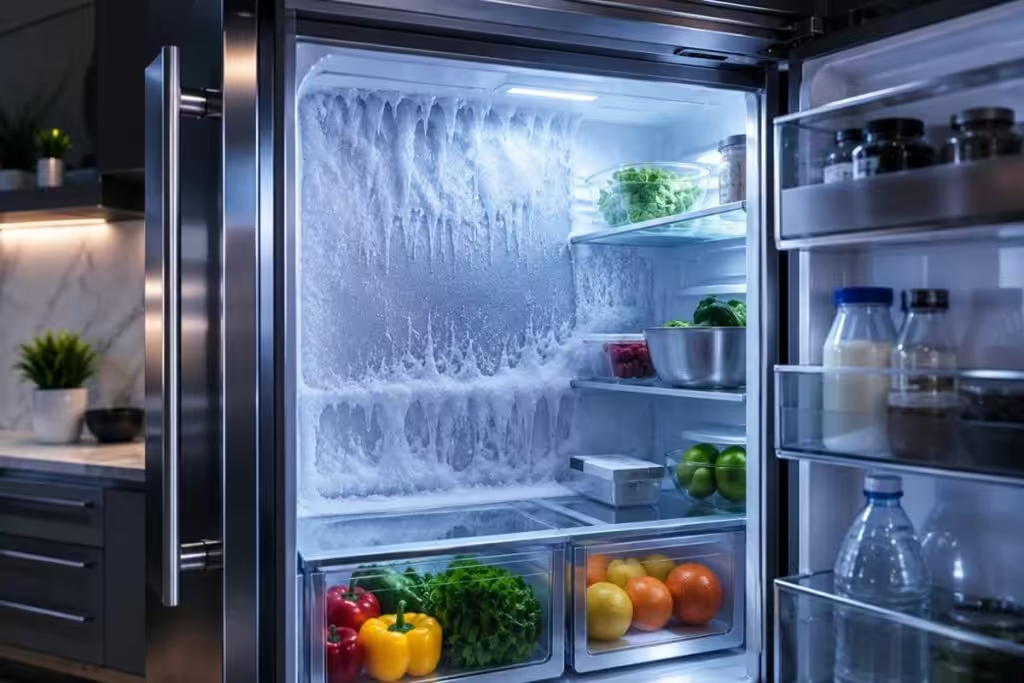
Frost building up on the back wall of a Sub-Zero refrigerator is one of the most misunderstood problems homeowners face. It looks like a minor inconvenience, but it points to a mechanical failure that will worsen without intervention. At Krupo Appliance Repair, we see this issue regularly, and the fix depends entirely on identifying the correct root cause.
Key Takeaways
- Frost on the back wall signals a defrost system fault, not just a temperature setting issue.
- Sub-Zero uses a sealed system that requires certified technicians for accurate diagnosis.
- A failed defrost heater, thermostat, or control board are the three most common causes.
- Ignoring the problem leads to compressor strain and shortened appliance lifespan.
- Certified repair using OEM parts is always more cost-effective than early replacement.
What Is That Frost, and Why Is It on the Back Wall Specifically?
The back wall of a Sub-Zero refrigerator is where the evaporator coil operates. This coil draws heat out of the cabinet to maintain the target temperature. Because it is the coldest surface inside the refrigerator, any moisture in the air will gravitate toward it and freeze.
A small amount of frost near the back wall is part of normal operation. But when you see thick sheets of ice, frost blocking the air vents, or frost spreading across the entire back panel, the defrost system is no longer doing its job. University research on frost accumulation on evaporator coils has shown that excessive frost acts as an insulating layer, reducing heat transfer efficiency, restricting airflow, and forcing refrigeration systems to work harder to maintain target temperatures.
Automatic defrost cycles are a standard feature on all modern refrigerators precisely because frost accumulation degrades energy efficiency and cooling performance. When that system fails, the consequences show up fast.
The Three Most Common Causes in Sub-Zero Units
1. Defrost Heater Failure
Sub-Zero refrigerators cycle through a defrost sequence at regular intervals. During this cycle, a heater briefly warms the evaporator coil to melt accumulated frost. The meltwater drains away through a dedicated drain tube.
When the defrost heater burns out, frost builds on the coil without interruption. Within days, the coil is encased in ice. Airflow drops, the refrigerator struggles to maintain temperature, and the back wall shows heavy frost coverage.
The defrost heater is a component that degrades over time with normal use. Heater element fatigue as one of the primary reasons automatic defrost systems fail in residential refrigerators after extended use.
2. Defrost Thermostat or Limiter Fault
The defrost thermostat monitors the temperature of the evaporator coil and signals the heater to shut off once the coil reaches a safe temperature. A defrost limiter is a safety component that cuts the heater if temperatures rise too high.
When either of these fails, the defrost cycle does not complete properly. The heater may not activate at all, or it may cut off too early before the coil is fully cleared. The result, again, is progressive frost buildup on the back wall.
3. Control Board or Defrost Timer Issues
Older Sub-Zero models use a mechanical defrost timer, while newer units rely on an electronic control board to schedule defrost cycles. A failed timer or malfunctioning board means the defrost cycle simply does not run, or runs incorrectly.
Control board diagnostics require specialized tools and brand knowledge. While some refrigerator faults can be identified by homeowners, electronic control failures in premium units should always be confirmed by a certified technician to avoid misdiagnosis and unnecessary part replacement.
Contributing Factors That Make the Problem Worse
Even when the defrost system is functioning, certain conditions can accelerate frost formation on the back wall:
- Door Left Open Longer Than Necessary: Warm air enters and the moisture freezes on the coldest surface, the back wall.
- Worn or Cracked Door Gasket: A seal that does not close completely allows continuous warm air infiltration, overwhelming even a working defrost system.
- Hot Food Placed Inside Without Cooling First: Steam from warm dishes contributes directly to interior moisture levels.
- High Ambient Humidity: In kitchens without adequate ventilation, the refrigerator encounters more moisture with every door opening.
- Overpacking the Refrigerator: Items blocking the rear vents restrict cold air circulation and create localized cold spots where frost forms first.
The Efficient refrigerator use, including proper loading and minimizing door-open time, reduces internal humidity and extends appliance component life.
How to Confirm the Defrost System Is the Problem
Before scheduling a service call, a few observations can help confirm whether the defrost system is involved:
- Manual Defrost Test: Unplug the refrigerator and leave the doors open for 24 to 48 hours to allow all frost to melt naturally. If the refrigerator cools normally for a few days afterward and then frost returns, a defrost system fault is almost certain.
- Check the Back Wall Vents: If the air vent openings on the back wall are blocked or iced over, airflow has already been compromised.
- Temperature Check: A refrigerator running warmer than its set point despite the compressor running continuously is a strong indicator that the evaporator coil is iced over.
Why Sub-Zero Repairs Require Specialized Technicians
Sub-Zero refrigerators are not standard appliances. They use a proprietary sealed system, brand-specific defrost architecture, and electronic controls that differ significantly from consumer-grade refrigerators.
Using a general repair technician on a Sub-Zero unit is one of the most common mistakes homeowners make. Appliances with integrated sealed systems and electronic controls require brand-certified expertise to diagnose correctly. Incorrect repairs can void manufacturer support agreements and lead to repeat failures.
Sub-Zero refrigerator repair service at Krupo Appliance Repair is performed exclusively by factory-trained technicians using genuine OEM components. Every repair is backed by a 12-month parts and labor warranty.
What Happens If You Delay the Repair
Frost on the back wall is not a stable condition. It grows. Here is what progressive defrost failure looks like over time:
- Week 1 to 2: Frost layer on the back wall, slight temperature rise inside
- Week 3 to 4: Vents partially blocked, food beginning to freeze near the back
- Month 2: Evaporator coil fully iced over, compressor running continuously to compensate
- Month 3 and Beyond: Compressor overheating risk, sealed system contamination, potential for total cooling failure
The Appliance Standards Awareness Project, a nonprofit dedicated to appliance efficiency policy, that unaddressed defrost failures in refrigerators are a leading cause of premature compressor replacement, one of the most expensive repairs in any refrigerator category.
Repair Cost Expectations
The cost to repair a Sub-Zero defrost system depends on which component has failed:
- Defrost Heater Replacement: $200 – $380
- Defrost Thermostat or Limiter: $150 – $300
- Mechanical Defrost Timer: $120 – $250
- Electronic Control Board: $350 – $700
- Door Gasket Replacement: $180 – $360
These ranges are consistent with national repair benchmarks. For a premium brand like Sub-Zero, component costs sit at the higher end of those ranges, but the longevity these units provide makes repair the financially sound choice in most cases.
Preventive Steps to Reduce Frost Recurrence
After a defrost system repair, a few habits help prevent frost from returning prematurely:
- Inspect door gaskets every 6 months, run a finger around the full perimeter and feel for gaps or soft spots
- Replace refrigerator air filter as recommended by the manufacturer, a clean air filter helps maintain proper airflow, reduces odours, and supports efficient refrigerator performance.
- Allow hot dishes to cool completely before placing them inside the refrigerator
- Avoid overfilling the unit, leave space for air to circulate freely around stored items
- Schedule annual professional maintenance, a certified technician will clean the condenser coil, verify defrost cycle timing, and check drain tube clarity
- Keep the kitchen well-ventilated during cooking to reduce ambient humidity near the refrigerator
Consistent appliance maintenance is one of the most effective strategies for reducing household energy consumption and preventing premature component failure.
Conclusion
Frost on the back wall of your Sub-Zero refrigerator is a clear signal, and one that should not be left to worsen. Whether the defrost heater, thermostat, or control board is at fault, the solution always starts with an accurate diagnosis. Contact us today. Our certified technicians will identify the exact cause, use genuine OEM parts, and restore your Sub-Zero to full working condition.
FAQs:
The defrost system has likely failed. A broken heater, faulty thermostat, or control board fault are the most common causes.
A thin layer is normal. Thick frost or ice sheets covering the vents indicate a defrost system malfunction requiring service.
Manual defrosting clears the frost temporarily. Without fixing the defrost system, heavy frost will return within days.
Most defrost component replacements are completed in a single service visit of two to three hours.
Yes. Left unresolved, frost restricts airflow and forces the compressor to overwork, shortening its lifespan significantly.
Repair costs typically range from $150 to $700 depending on which defrost component has failed.